


Leopards: Mastering the Art of the Unseen
- 6 days ago
- 1 min read
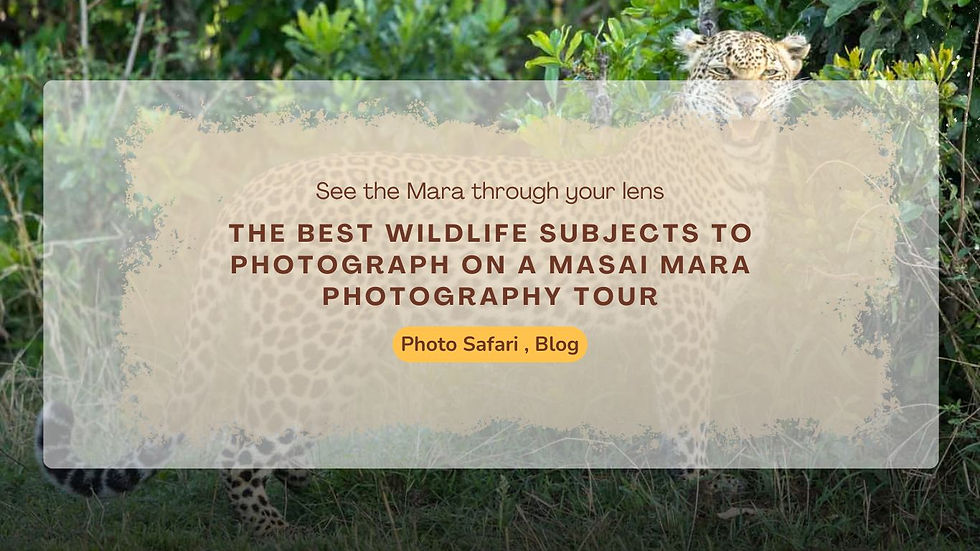
Leopards are among the most elusive and rewarding subjects in wildlife photography due to their secretive and solitary nature. On a Masai Mara photography tour, sightings are unpredictable and often require patience and sharp observation skills. Leopards spend most of their time hidden in trees, dense vegetation, or shaded riverine areas, making detection extremely difficult. Photographers must rely on indirect signals such as alarm calls from baboons, sudden silence in prey species, or vultures circling above a potential kill site.
This unpredictability is why many professionals prefer Masai Mara photography tour packages, which include experienced guides trained in tracking leopard behavior and territory movement. These guides use real-time communication and ecological knowledge to increase sighting success rates. Staying at Mara Siligi Camp improves opportunities further because of its proximity to wooded and riverine habitats where leopards frequently rest or hunt. Leopard photography often occurs in low light conditions, requiring careful exposure control, high ISO performance, and precise focus locking. When captured successfully—especially with visible behavior such as feeding, resting on branches, or scanning territory—leopard images become rare, high-impact visuals that stand out in any serious wildlife portfolio.



Comments